Event date
25 / 07 / 2027 - Sunday 18:00
Event venue
Event type
Vojtěch Semerád / Metamorfosi
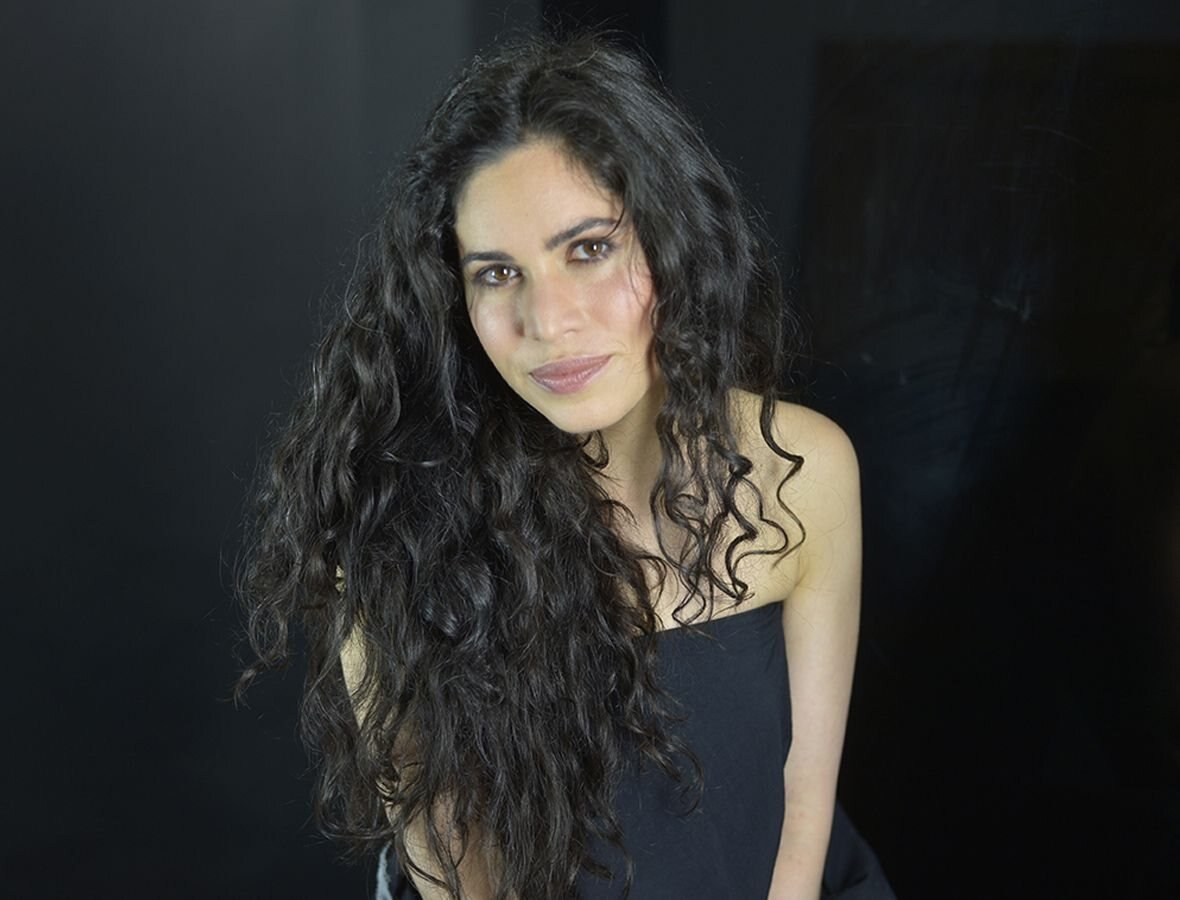
Music without borders, a dialogue across cultures and centuries, and a shared search for a universal artistic language. The extraordinary Metamorfosi project explores the fascinating transformations of Eastern and Western music, bringing different musical worlds together through shared stories and emotions.
This concert is part of the festival package
Sacred Paths of the FestivalWith the distinctive project Metamorfosi – Dialogue of Voices, Festival Krumlov will build on its cross-border collaboration with the Upper Austrian region and, for the first time in its history, present a performance on Austrian soil. Conceived by Vojtěch Semerád, Metamorfosi brings together artists of different nationalities and musical traditions. Yet it is far more than a concert featuring outstanding musicians. It is the culmination of a journey in search of shared roots and a common language that transcends cultural boundaries. Fittingly, the project draws inspiration from Ovid's Metamorphoses, as myths and legends, however they may evolve and transform, have been fundamental to human culture since time immemorial, accompanying us regardless of our origins.
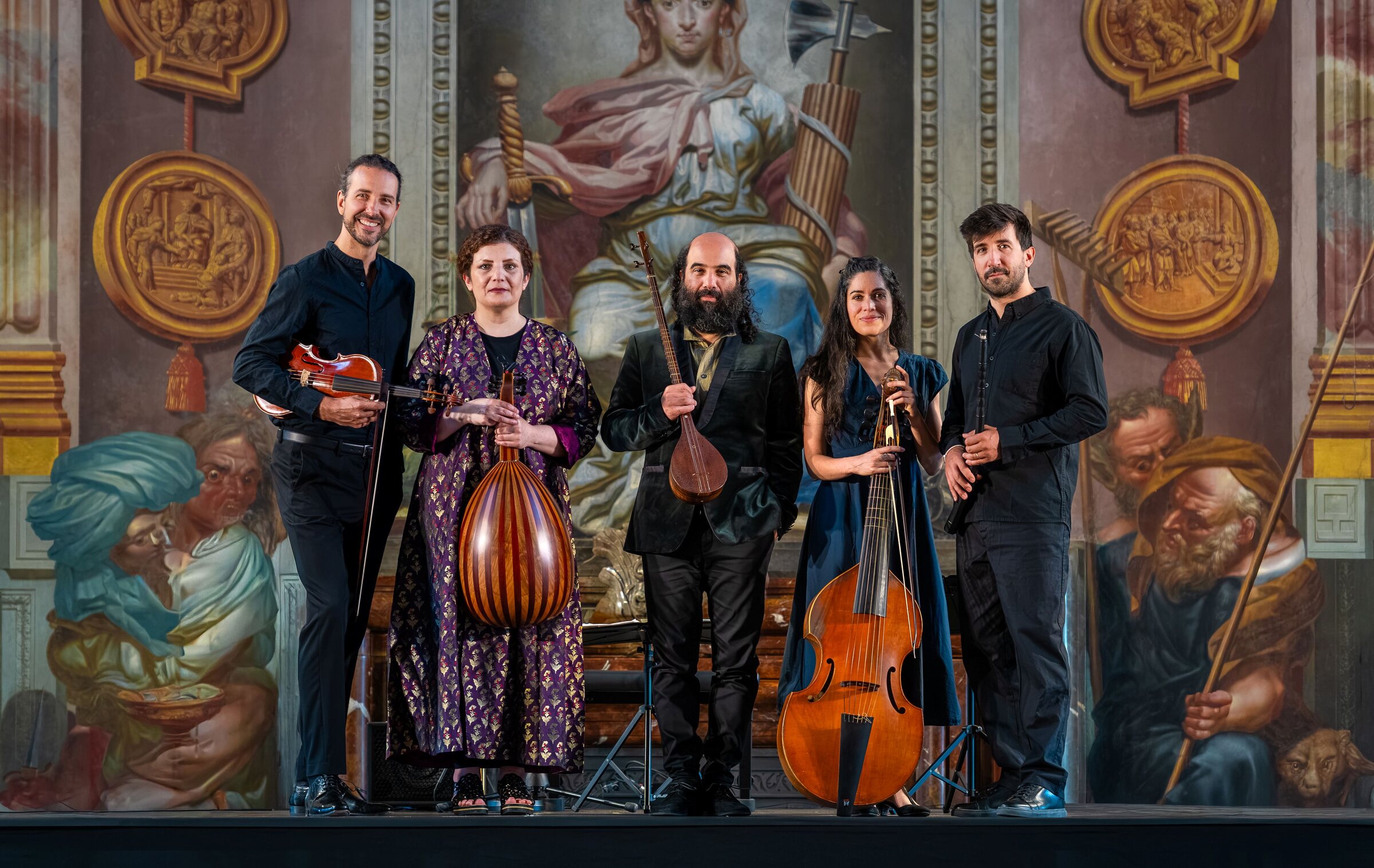
In Metamorfosi, five musicians from different parts of the world will bring to life five stories from Ovid's work, including those of the nymphs Echo and Daphne, the legendary musician Orpheus and the prophetess Sibyl. Together, they explore connections between different cultures while preserving their individual identities.
This musical journey spans ten centuries, from the 10th to the 20th century, embracing traditional Persian music sung in Farsi, a language closely associated with the cultural identity of Persia and Iran; tarab, an Arabic musical tradition characterised by emotional intensity and repetition; plainchant; Renaissance polyphony; richly ornamented Baroque compositions; 20th-century works; folk songs; and improvisation.
Through this dialogue of voices, the musicians seek to discover a universal artistic language capable of conveying the emotions and ideas of our ancestors while continuing to resonate directly with audiences today.
Artists
Vojtěch Semerád – voice, baroque violin, concept
Waed Bou Hassoun – oud, voice
Jonas Nordberg – archlute
Matyáš Houf – cornett
Lucile Boulanger – viola da gamba
Program
CREATION
Kiya Tabassian (* 1976): Nafas
Anonymous: Na svatém kopečku – Mikham Beram Kouh
Philippe Hersant (* 1948): Les Ombres
Anonymous: Houb – Bayatî Pishrow
ECHO
Philippe Hersant: La Messagère
Anonymous – Kiya Tabassian: Media vita – Malaek
Nicolò Borboni (ca 1591–1641): Solo e pensoso
Waed Bou Hassoun (* 1979): Yā man
Arnold von Bruck (ca 1500–1554): Mitten wir im Leben sind
— interval —
DAPHNE
Philippe Hersant: Fanfare
Anonymous: Al Maya
John Playford (1623–1686): When Daphne from Fair Phoebus Did Fly
Dimitrie Cantemir (1673–1723): Geveşt Pishrow
ORPHEUS alias LAYLA
Philippe Hersant: La Harpe d’Orfée
Waed Bou Hassoun: ‘ala Dimashiq
Jacopo Peri (1561–1633): Lamento d’Orfeo
Salomone Rossi el Hebreo (1570–1630): Sonata duodecima
Kiya Tabassian: Motreb-o Mey
Claudio Monteverdi (1567–1643): Si dolce è’l tormento
SIBYLLA
Philippe Hersant: Les Esprits
Omar Al Batš (1885–1950): Dha-Al Ahayafou
Stefano Landi (1587–1639): Passacaglia della vita (Homo fugit velut umbra)
Kevser Hanım (ca 1880–1950): Nihâvend Longa
Vojtěch Semerád
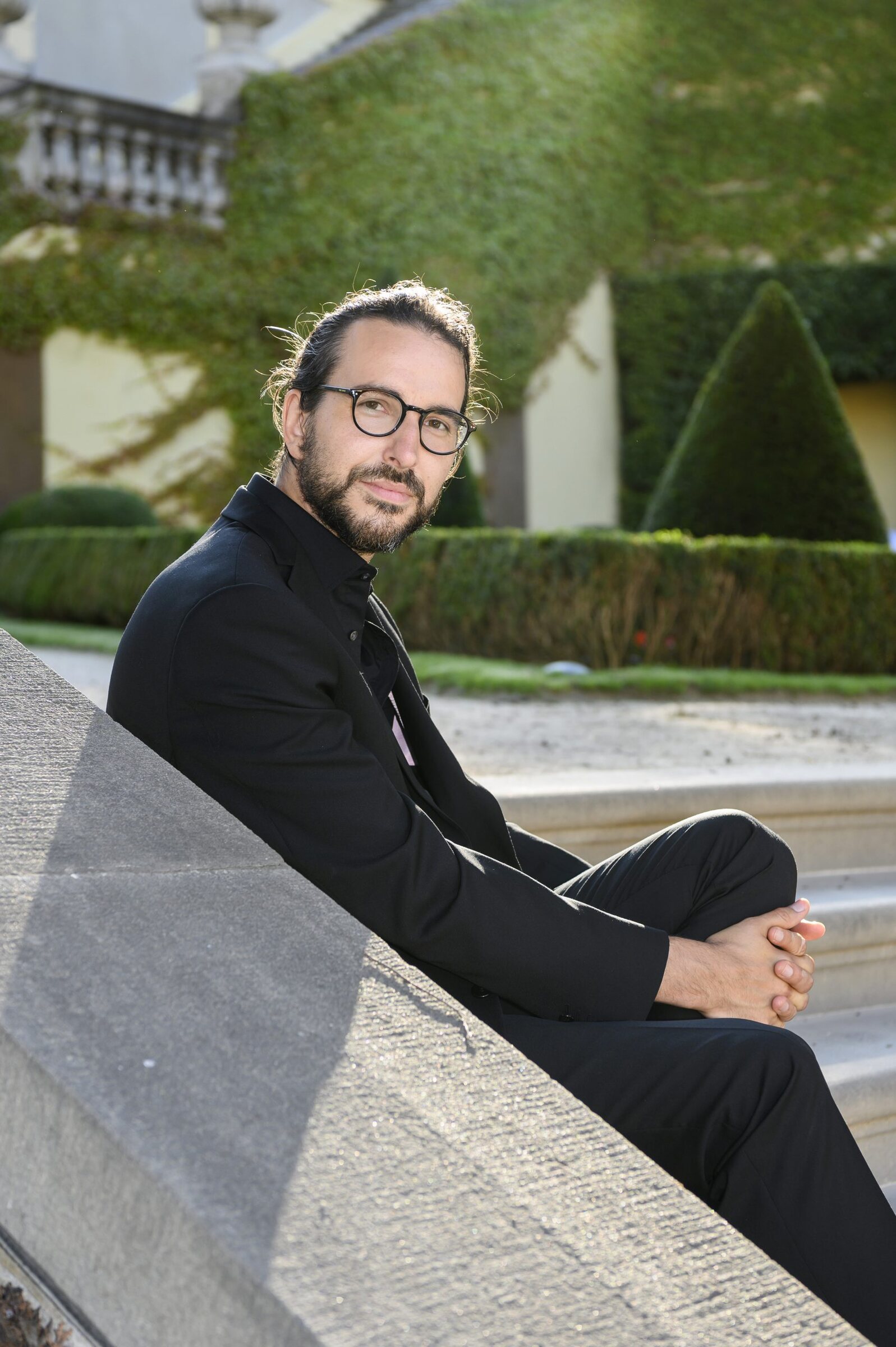
Vojtěch Semerád is a graduate of the Prague Conservatory, the Faculty of Pedagogy of Charles University in Prague (Choirmastering), and the Conservatoire national supérieur de musique et de danse de Paris (Baroque violin with François Fernandez). He is a finalist of the Telemann-Wettbewerb International Competition in Magdeburg. He has been trained as a singer since 2010 throughout private lessons (with teachers such as Chantal Santon Jeffery, Peter Kooij, Poppy Holden) and many masterclasses.
As a solo singer, Vojtěch Semerád is invited by renowned ensembles such as Les Arts Florissants, Ensemble Correspondances, Wroclaw Baroque Orchestra, Vox Luminis, or Huelgas Ensemble, with whom he performs at major international venues and festivals such as Théâtre des Champs-Elysées, Park Avenue Armory in New York, Logan Center for the Arts in Chicago, Concertgebouw Rotterdam, Wigmore Hall in London, Palau de la Música Catalana in Barcelona, etc. He has taken part in several opera productions, and has recently sung the role of Acis in Georg Friedrich Handel’s Acis and Galatea, the role of Atys in Jean-Baptiste Lully’s Atys, the role of Pythonisse in David et Jonathas and Histoires Sacrés by Marc-Antoine Charpentier, or The Fairy Queen by Henry Purcell. He is regularly invited as the Evangelist in passions and oratorios by Johann Sebastian Bach.
Vojtěch Semerád is the artistic director of the vocal ensemble Cappella Mariana, with which he performs forgotten works of vocal polyphony of Middle Ages, Renaissance and Baroque era. Today the ensemble is regularly invited to the prestigious festivals, a.o. Oude Muziek Utrecht, MAfestival Brugge, Voices of Passion in Leuven, Laus Polyphoniae in Antwerpen, Klangvokal Musikfestival Dortmund, Prague Spring, Innsbrucker Festwochen der Alten Musik, Tage Alter Musik Regensburg, Summer Festivities of Early Music and Concentus Moraviae. The ensemble received the Czech Angel Award for Best Recording in the category of Classical Music for 2024 for the project Pilgrimage.
As a violinist, Vojtěch Semerád is a permanent member of the Collegium Marianum ensemble and also performs in multi-genre and original musical projects.
He has recorded for Deutsche Gramophon, Naïve, Harmonia Mundi, Passacaille and Supraphon, in total more than 30 recordings, and also regularly records for Czech Radio. Vojtěch Semerád is also a researcher, focusing on the discovery of 15^th^, 16^th^ and 17^th^ century vocal music in Central Europe.
Waed Bou Hassoun
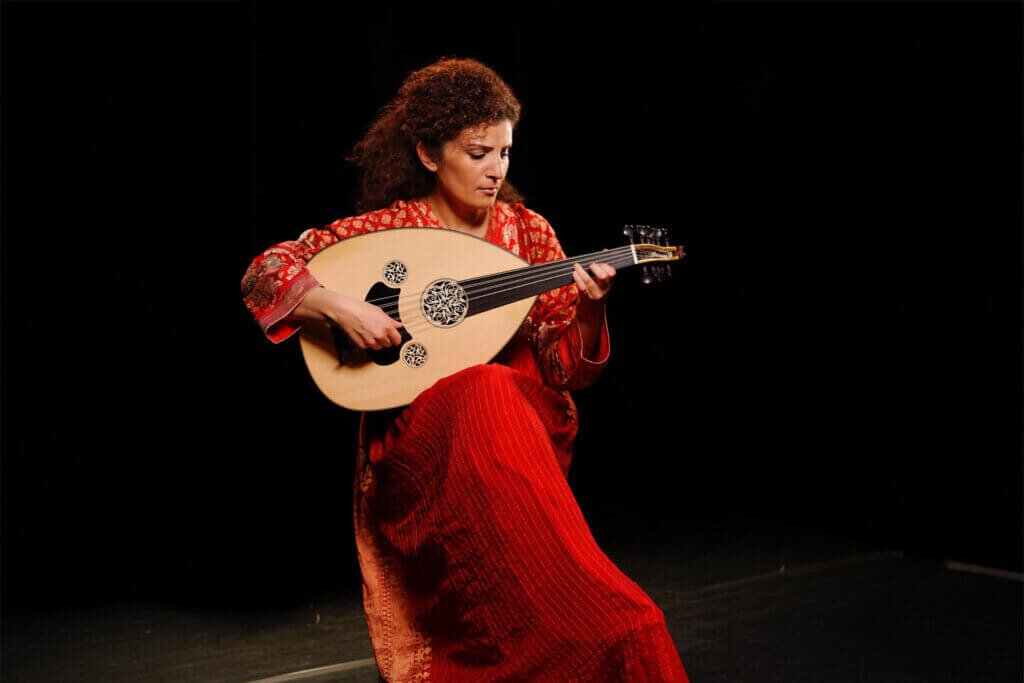
Since 2006, Waed Bou Hassoun has been pursuing an international career as a musician, singer, oud player and composer. She is also an ethnomusicologist. Originally from southern Syria, Waed Bou Hassoun was born in a village near Sweida, into a music-loving family: her father gave her a small oud when she was only seven years old. She sings poems that she gathers from the vast repertoire of pre-Islamic Arabic poetry, as well as from ancient (7^th^–13^th^ century) mystical Arab-Andalusian sources and from contemporary poets. She performs her own compositions, accompanying herself solo on the oud.
Waed Bou Hassoun has toured solo and in ensembles in the Arab world, in Europe, Canada, South Korea, and Colombia. In 2009, she recorded her first CD, “La voix de l’amour” (Institut du monde arabe), and was awarded the “Coup de cœur” by the Académie Charles Cros the same year. In 2014, she recorded her second solo CD for Buda Musique in Paris, “L’âme du Luth”, for voice and oud. This album also won a “Coup de cœur” from the Académie Charles Cros in 2015. In September 2016, her third CD, “La voix de la Passion”, was released by Buda Musique, followed in March 2019 by her fourth album, “Safar: les âmes retrouvées”, also with Buda Musique.
In parallel with her career as a soloist, Waed Bou Hassoun regularly collaborates with Jordi Savall and his ensemble Hespèrion XXI, both in concert and on recordings. She also works with Jordi Savall as artistic director on the implementation of the Creative Europe project Orpheus XXI – Music for Life and Dignity.
In March 2018, Waed Bou Hassoun was made a Chevalier de l’Ordre des Arts et des Lettres by the French Minister of Culture, Françoise Nyssen. Finally, in 2022, the Middle East and Muslim Worlds Thesis Prize was awarded to Waed Bou Hassoun for her thesis Chants et lamentations dans les rituels funéraires chez les Druzes du sud de la Syrie. Une approche ethnomusicologique, which she defended at the University of Paris Nanterre.
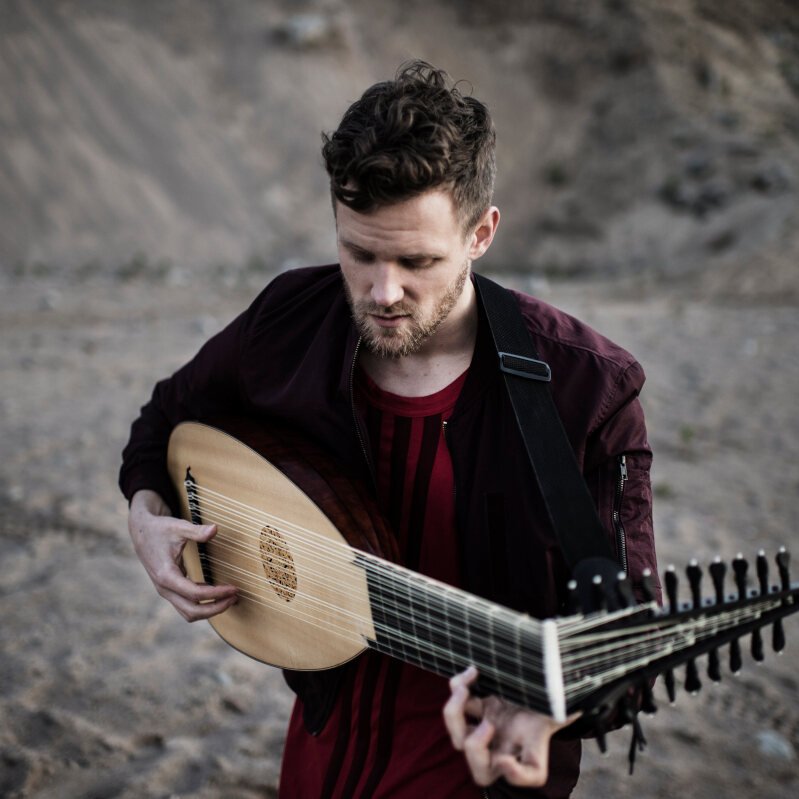
Jonas Nordberg
A graduate of the Mozarteum University Salzburg and the Royal College of Music Stockholm, he has an active schedule in more than 25 countries, performing solo concerts, chamber music, staged performances and large ensemble work.
As a recording artist, 2015 saw his solo debut album for Eudora Records, Music by de Visée, Weiss & Dufaut, released to critical acclaim worldwide. In 2017 Heroines of love and loss was released on BIS Records featuring music by female composers and fictive heroines together with Ruby Hughes, soprano and Mime Yamahiro-Brinkmann, baroque cello, receiving a Diapason d’Or award.
From 2018 onwards he records solo work exclusively for BIS Records, releasing Intavolatura di Chitarrone featuring music by Giovanni Girolamo Kapsperger (Gramophone Editor’s Choice) as his initial album in 2019. 2022 saw the release of Lessons with solo lute works by John Dowland.
His solo recital programs include the music of John Dowland, music for theorbo by Robert de Visée, French lute music juxtaposed with works by Silvius Leopold Weiss as well as the wizardry Italian Giovanni Girolamo Kapsperger. Often these programs are mixed up with works by contemporary composers, creating a varied soundscape and a big range of expressions.
Together with soprano Ruby Hughes he performs all lute song repertoire, with a special focus on the Elizabethan Era and Italian monody. With viol player Liam Byrne he explores the music of Marin Marais and other French composers mixed with contemporary music for theorbo/viol & electronics. In a chamber ensemble setting he works regularly with El Gran Teatro del Mundo (ES), CONTINUUM (DE) & Orfeus Barockensemble (SE).
Venues in recent seasons include BAM New York, Philharmonie de Paris, Concertgebouw Amsterdam, Berlin Philharmonie, Palau de la Musica Barcelona, National Sawdust NYC, Wigmore Hall, Kioi Hall Tokyo, Shanghai Oriental Arts Centre, Royal Opera House London, King’s Place London, Concertgebouw Brügge, Opera Comédie Montpellier, Grand Théatre Luxembourg, Mozarteum Salzburg, Drottningholms Slottsteater, Confidencen, Malmö Opera, Kulturhuset Stadsteatern Stockholm, Helsinki City Theatre, Salzburger Landestheater, Gothenburg Concert Hall, Stockholm Concert Hall etc.
He performs with period ensembles such as Akademie für Alte Musik Berlin, Collegium Vocale Gent, Orchestra of the Age of Enlightenment, London Handel Orchestra, Concerto Copenhagen, Orfeo 55, Drottningholm Baroque Ensemble, Armonia Athenea, Insula Orchestra, Concerto Köln, Camerata Øresund, Les Accents & Rebaroque. He also works with modern orchestras Aurora Orchestra, Mozarteum Orchester Salzburg, Gothenburg Symphony Orchestra, Swedish Radio Symphony Orchestra, Rotterdam Philharmonic, Swedish Wind Ensemble, Ensemble 1B1, Aalborg Symphony Orchestra & Gävle Symphony Orchestra.
He has an extensive collaboration with choreographer Kenneth Kvarnström, resulting in six large scale stage works in recent years. The meeting between baroque music and contemporary dance gives the music a new dimension, a visual chamber music partner for the solo pieces and a way to communicate through physical gestures and impulses. In their most performed work, sofa(r), Nordberg and Kvarnström teamed up for a critically acclaimed duet combining elements of dance, baroque music for lute and theorbo, electronic music and speech in a dark world exploring death. This also marked his debut as a dancer.
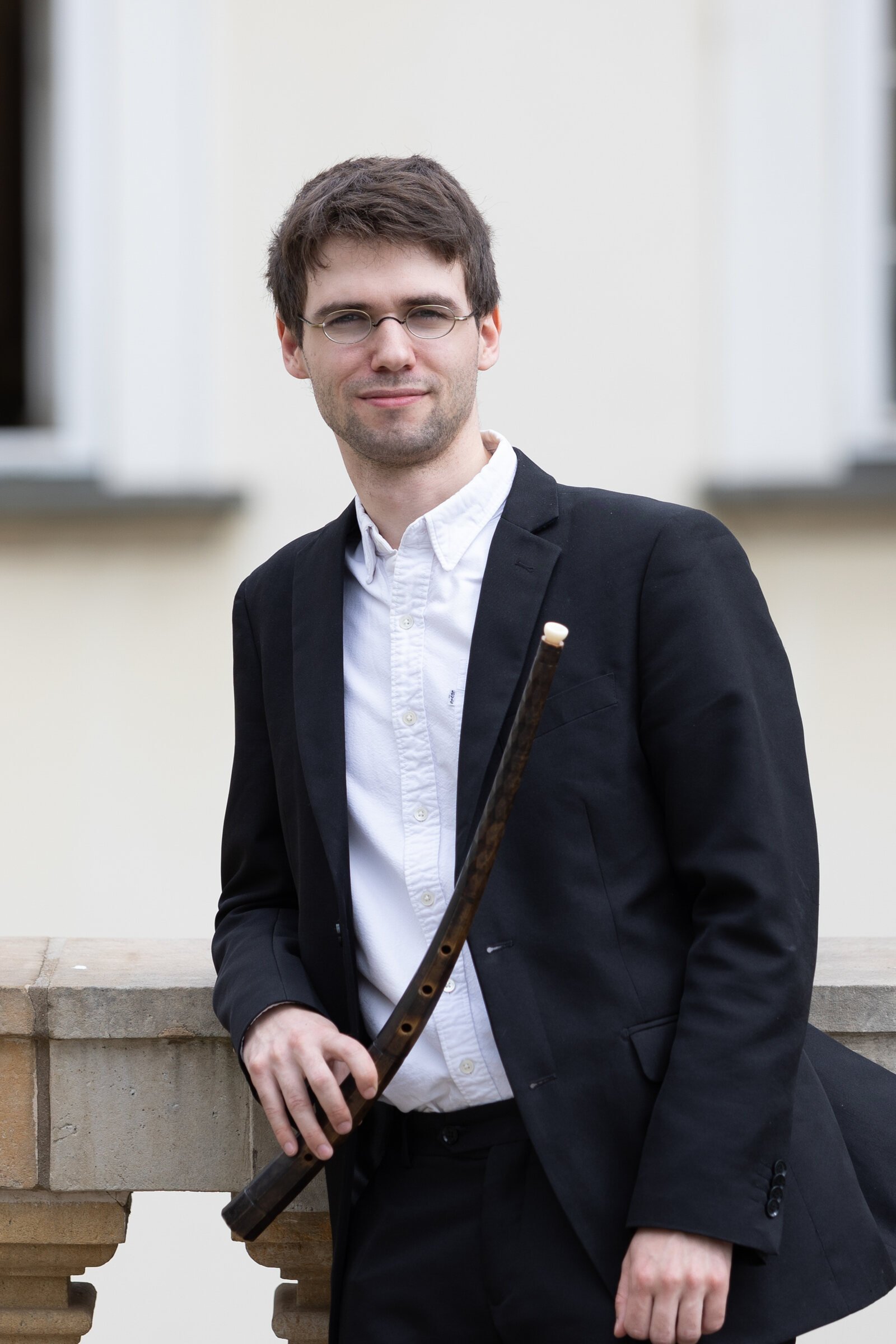
Matyáš Houf
Matyáš Houf is a cornett and recorder player based in Basel and Prague. He first trained in medal-making and artistic metal engraving in Turnov. He then studied music at the Royal College of Music in London, the HMDK Stuttgart, ESMUC in Barcelona and the Schola Cantorum Basiliensis.
A deep interest in the art and craftsmanship of the 16th and 17th centuries shapes both his music and his visual art. Alongside performing and his work as a visual artist, he researches historical instruments. He examines and measures surviving Renaissance and Baroque cornetts in European museum collections and makes replicas of them, which he also plays in concert.
He performs with the ensembles Silentium!, English Cornetts and Sackbuts, Czech Ensemble Baroque, Musica Bohemica and La Tempesta. He is a prizewinner of the Concertino Praga International Competition and the Orlando di Lasso Competition, and a three-time prizewinner at the Summer School of Baroque Music in Holešov.
Lucile Boulanger
Lucile Boulanger began learning the viola da gamba at the age of five with Christine Plubeau, before going on to study with Ariane Maurette, Jérôme Hantaï, and finally Christophe Coin at the Paris Conservatoire. She has won numerous prizes at prestigious international competitions, including the Bach-Abel Competition in Köthen and the Musica Antiqua Competition in Bruges.
Greatly in demand as a chamber music artist, she has played and recorded with Philippe Pierlot and the Ricercar Consort, François Lazarevitch, Justin Taylor, and Pierre Hantaï; she also regularly performs with larger ensembles such as Ensemble Pygmalion, directed by Raphaël Pichon.
She appears frequently as a recitalist, both in France and internationally. Her recordings for Alpha Classics and Harmonia Mundi labels have received numerous awards and widespread public acclaim.
Refusing to regard the viol as the vessel of a bygone aesthetic tradition, she uses her programmes to expand and re-energise the repertoire of her instrument, not only through the practice of transcription but also through contemporary works. Several compositions have already been dedicated to her.
Lucile Boulanger is also involved in a number of unusual collaborations, including projects with accordionist Théo Ould, clarinettist Christian Elin, and electronic music artist Calling Marian. She takes part in several stage productions, such as Phénix by choreographer Mourad Merzouki (on tour since 2022) and Bartabas’s upcoming equestrian show (late 2026).
She was awarded the Victoire de la musique classique 2025 in the Instrumental Soloist category. Lucile Boulanger currently teaches the viola da gamba at the Conservatoire royal de Bruxelles and was recently appointed professor at the Conservatoire national supérieur de musique et de danse de Paris.